How to Write a Documentary Script: The Complete Guide (With Free Templates)

In short: To write a documentary script, choose the narration style first. For narrator or presenter-led films, write a two-column A/V script before filming. For interview-led films, review the footage, highlight transcripts, organise selects, structure them in three acts, then write the script and get feedback.
Most people think documentaries just happen, either on set or in the edit, and that the story somehow writes itself. When I started out I thought that too, until I sat down with hours of footage and realised I had no idea what my film was actually about.
A script gives your film structure, direction and purpose. Here's the scriptwriting process I use on every project, whether you're scripting before filming or shaping your story afterwards.
To follow along, download my free documentary script templates. They include an A/V script template and a paper edit template.
What is a Documentary Script?
A documentary script is a planning document that outlines your film's narration, scenes, dialogue, interviews and visuals. Unlike a narrative screenplay, it isn't written word for word.
It's not a rigid blueprint that locks in every decision before you've picked up a camera. Documentary filmmaking is unpredictable, so your script is a living document that evolves as you capture unexpected moments and refine your story in the edit.
Documentary Narration Styles: How They Shape Your Script
Before you write a word, decide how your story will be told. I don't mean subject matter or visual style. I mean narration style, the backbone of how the audience experiences your story.
Film theorist Bill Nichols famously categorised docs into six modes, but those mix narration with subject matter and visual technique, which gets confusing when you're planning a real film. So I've simplified things into four core narration styles, focusing purely on how the story is told.
Your narration style shapes almost everything about your script: whether you're writing interview questions or voiceover, how much you can plan before filming, and where the main emotion comes from.
1. Interview-Led
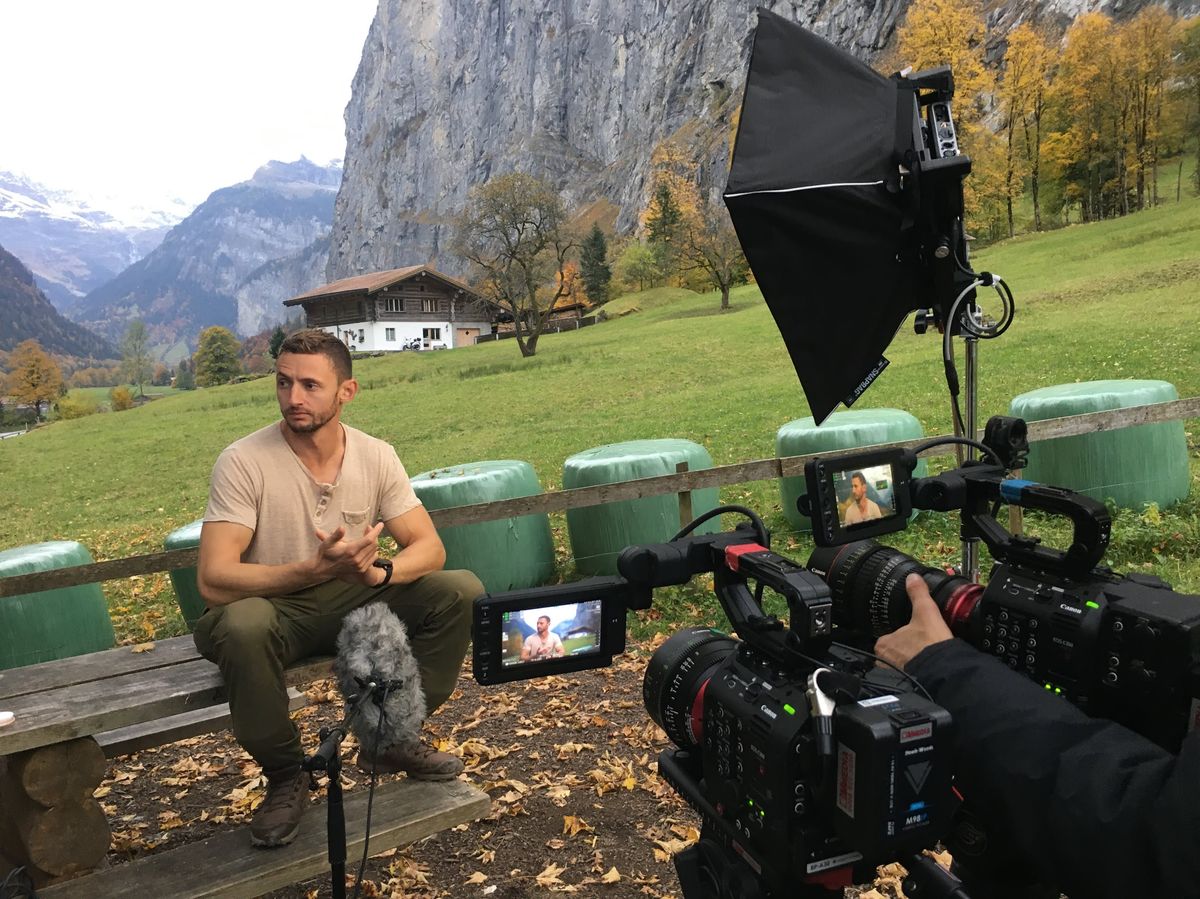
Characters are interviewed by the filmmakers, and their answers are woven together in the edit, overlaid with b-roll, photos or animation. Searching for Sugar Man is a great example: the whole story is told through interviews about Rodriguez and the impact of his music.
For your script: You'll build it after filming, selecting and arranging quotes from transcripts rather than writing narration. The paper edit is your key tool. Make sure your main subjects have expressive voices, because monotone delivery kills even the best content.
2. Narrator-Led
Footage is shown with a narrator's voice describing the story, giving context and guiding the audience. The narrator is never seen on camera. Think Morgan Freeman in March of the Penguins.
For your script: You have the most control here, since you're writing the voiceover yourself. Write an A/V script before filming, as your narration drives the visuals you need to capture. The danger is being heavy-handed with facts and figures rather than letting key moments play out visually.
3. Presenter-Led
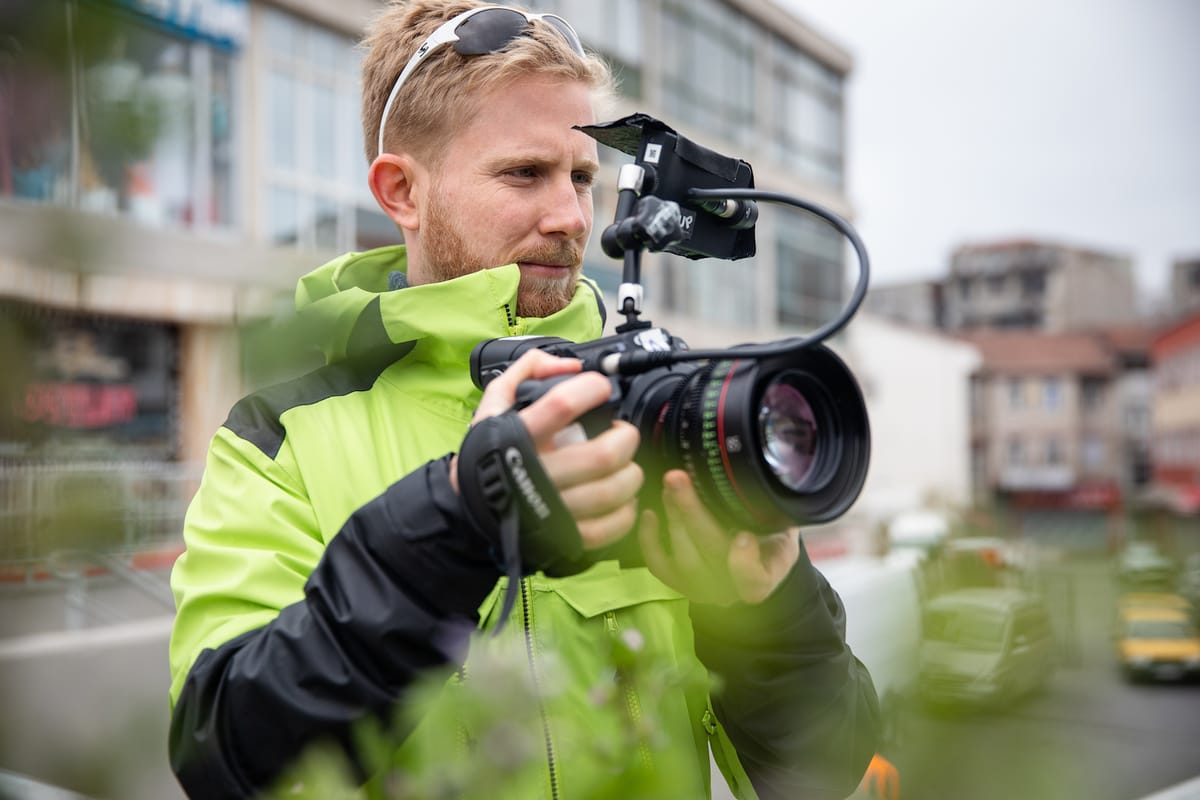
A person presents the story to camera, conducts interviews and may do voiceovers. The presenter could be the filmmaker, a journalist or an expert. Michael Moore in Bowling for Columbine is a classic example. The key difference: the storyteller is physically on screen.
For your script: You'll write for on-camera delivery, including pieces to camera and planned interactions. An A/V script written before filming lets you plan presenter segments, questions and visual sequences in advance. A presenter gives a larger story a human focus, but can sometimes distract from the main ideas.
4. Observational-Led
No interviews, no presenter, no voiceover. The viewer simply observes events as they unfold, like a fly on the wall. The short film Skip Day uses this approach, showing high-school seniors in the Florida Everglades without any narrated guidance.
For your script: This is the lightest script of the four, more a structural outline than a detailed plan. Waiting for compelling events to unfold can take months or years, but done well, it produces some of the most truthful documentary filmmaking there is.
Mixing Styles
Most documentaries combine at least two of these styles. The British documentary Virunga blends interview-led and observational-led filmmaking to powerful effect, so don't feel limited to one approach.
For more on choosing a style, read my guide to the four documentary narration styles.
Documentary Script Format: A/V Script vs Paper Edit
The two main formats are the A/V script and the paper edit. Which one you use depends on your narration style and whether you're scripting before or after filming.
A/V Script (Audio/Visual Script)
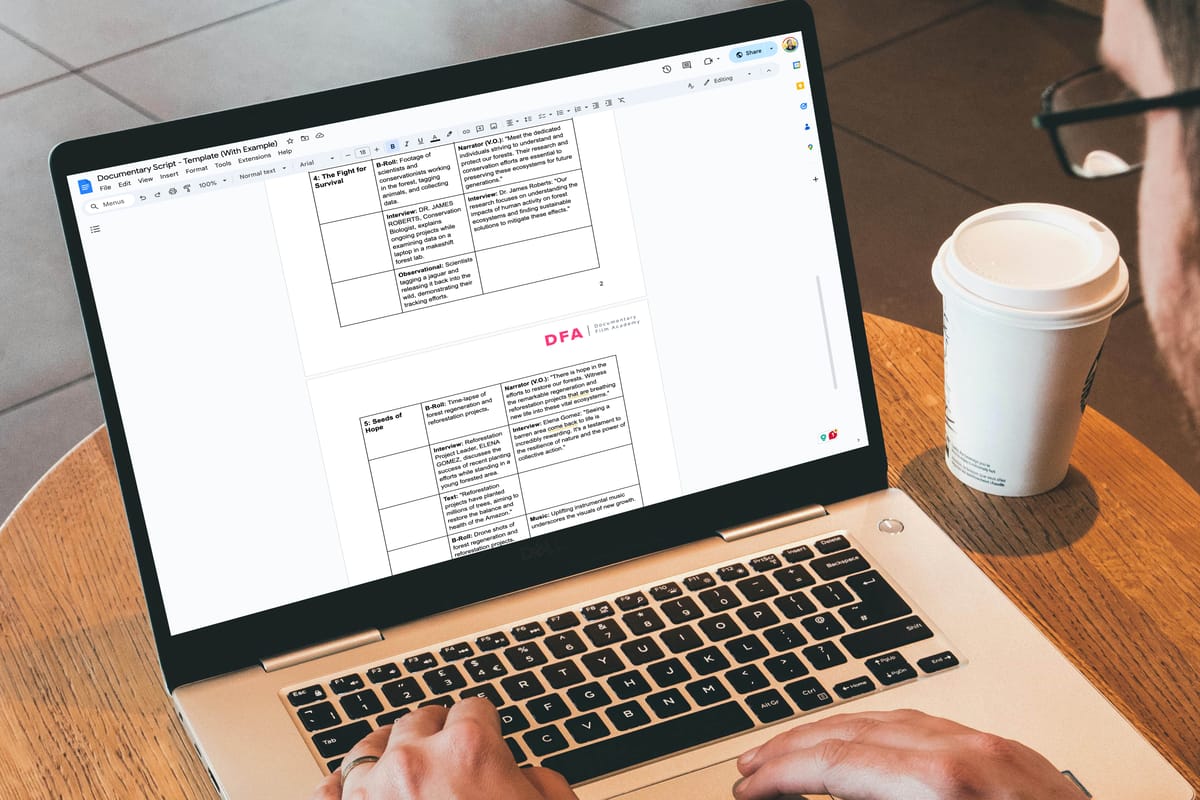
An A/V script divides the page into two columns: one for what the audience sees and one for what they hear. It's ideal for planning how narration, interviews and visuals work together.
When to use it: Before filming. It suits presenter-led and narrator-led documentaries, where you're writing voiceover or pieces to camera and need to plan the visuals to capture. It's also great for corporate or educational docs where picture and sound need to be precisely choreographed.
Paper Edit
A paper edit is a detailed outline created after filming. You select your best footage, work from interview transcripts and arrange everything into a structure that's logical and emotionally engaging.
When to use it: After filming. It suits interview-led documentaries, where you shape the story from the footage and transcripts you've captured.
Essential Pre-Writing Steps
Before you write your script, you need thorough research on your subject and a clear narration style. With those in place, the next step is your treatment.
Create a Documentary Treatment
A treatment is a detailed outline of your film, covering the key story points, character arcs, themes and structure. It's the bridge between your research and your finished script.
Related guide: how to write a documentary treatment that wins funding
When Should You Write Your Documentary Script?
When you write the detailed script depends on the type of documentary you're making.
Presenter-led or narrator-led docs: Write your A/V script before filming. You're writing voiceover or pieces to camera, so the script becomes your filming blueprint.
Interview-led docs: Don't write a full script before filming. Instead, write a one-pager using the three-act structure: a compass for what the story could be, the key themes and where you hope it might go. Then structure your interview questions around those three acts.
Act One questions cover setup and backstory: your subject, their world and what set them on this path.
Think: Who are you? What do you do? How did this all begin?
Act Two questions dig into conflict and challenges: the obstacles, turning points and emotional depth that carry the middle of your film.
Think: What went wrong? What surprised you? What was the hardest moment?
Act Three questions push towards resolution and reflection, the kind of quotes that land at the end of a film.
Think: What did you learn? What's changed? What happens next?
You're not scripting the answers, but you are guiding the conversation so your footage naturally falls into a narrative arc. When you sit down to do your paper edit, your material already has shape.
Once the interviews are filmed, write the detailed script from your transcripts, building the story around the strongest material you've captured.
How to Write a Documentary Script: 6 Steps
These steps follow the paper edit approach, ideal for interview-led documentaries where you've already filmed (or at least started filming). For a presenter-led or narrator-led documentary, apply the same principles to an A/V script during pre-production.
Step 1: Review All Your Footage
Watch everything you've shot. All of it. If you have several interviews, start with the most important ones, your main characters and key experts, then work through the supporting material.
Take notes as you go. Mark the moments that give you goosebumps and flag where a subject says something that crystallises a theme or reveals a deeper truth.
Step 2: Create and Analyse Your Transcripts
Get every interview transcribed, then read each transcript with a highlighter (physical or digital). You're not looking for every interesting thing someone said, only the moments that build your story's dramatic arc.
As you read, look for each character's:
- Wants: What goals are driving their actions?
- Needs: What must they learn or do to succeed or grow?
- Obstacles: What barriers stand in their way, both internal and external?
- Stakes: What's at risk if they fail? Think physical, emotional and philosophical consequences.
Without these elements, you have information. With them, you have a story.
Step 3: Organise Your Selected Quotes
Copy every highlighted section into a separate document called "selects". For each quote, include:
- The filename or interview name
- The timecode
- The speaker's name
- The full quote
This becomes your working library. When you structure your script, you'll pull quotes from here and slot them into the right moments.
Step 4: Structure Your Documentary Script
Using index cards, sticky notes or a digital tool like Milanote, create individual scenes from the themes and story beats you've identified. Then arrange them into a clear structure.
I recommend the three-act structure you used for your interview questions. Act One (roughly 25%) sets up your subject and the central question. Act Two (roughly 50%) builds tension through obstacles and discoveries. Act Three (roughly 25%) brings resolution or reflection. Move scenes around freely and try different orders to see what creates the strongest emotional arc.
Step 5: Write the Documentary Script
With your quotes organised and your structure in place, it's time to write. If you're unsure your story has enough to hold an audience, my guide on what makes a great documentary is a useful check.
I recommend the A/V script format, with visuals on one side and audio on the other. It makes you think about picture and sound together, which is how the audience will experience your film. There's an A/V script template and an example script in my Documentary Storytelling Toolkit.
Your first draft won't be your last. Be prepared to cut material you love and move sections around. The script serves the film, not the other way around.
Step 6: Get Feedback
Before you lock your script, share it with trusted colleagues or fellow filmmakers. Fresh eyes catch structural problems you've become blind to, and moments that are unclear to someone who hasn't lived with the footage for months.
Be specific about the feedback you want. Is the narrative clear? Are there dead spots? Does the ending land?

Writing Narration for Your Documentary
Narration is the voice that guides the audience through your film. It usually sits over the visuals to explain context, clarify ideas or move the story forward.
Used well, it fades into the background and the viewer absorbs the information without feeling lectured. Used badly, it repeats what the audience can already see and quickly loses their attention.
Keep It Concise
Every word of narration needs to earn its place. If the visuals or interviews already convey the information, cut it. Narration should add context and bridge sections.
Complement, Don't Compete
If you're showing aerial footage of a devastated landscape, don't have the narration say "as you can see, the landscape is devastated." Use narration to add what the visuals can't, such as the human story behind the destruction or the historical context that makes it significant.
Write for the Ear
Narration is spoken, not read, so write short, clear sentences. Read it aloud: if you stumble over a phrase, your narrator will too. Use active voice ("Glaciers are melting" hits harder than "glaciers have been melting") and keep the tone conversational rather than academic.

Scripting Documentary Recreations
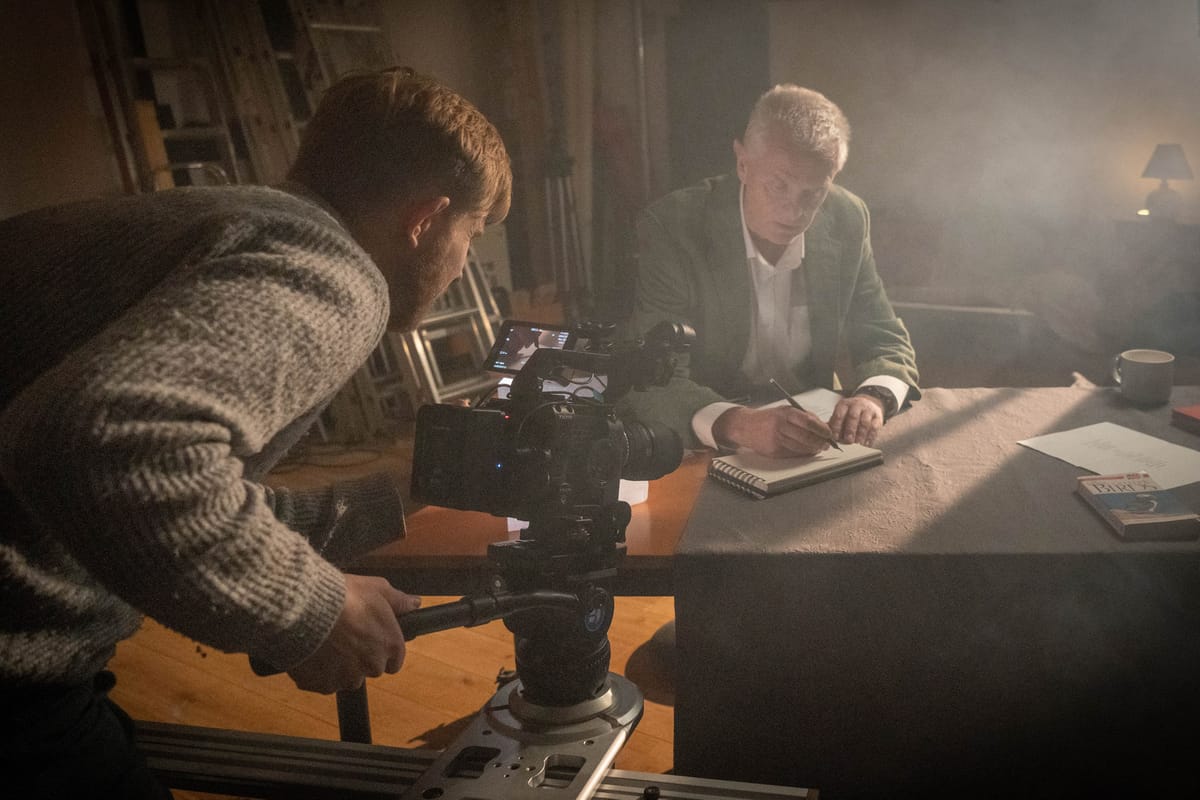
Recreations of past events blend documentary and narrative filmmaking, so they need a different approach. I recommend a traditional narrative script format using software like Final Draft or Celtx. Include:
- Scene headings that show the location and time of day (for example, INT. KITCHEN, followed by DAY)
- Action lines
- Dialogue with the character's name centred above their lines
- Camera directions
- Parentheticals
- Clear emotional direction
The key rule: recreations should serve the truth of the story, never distort it for dramatic effect.
Documentary Script Example
Here's a simplified example of an A/V script, based on a hypothetical environmental documentary.
SCENE 1: OPENING
| VISUAL | AUDIO |
|---|---|
| Wide aerial shot: sun rising over a mountain village. Smoke drifts from chimneys. | Natural ambient sound: birdsong, distant water. |
| Slow zoom into a farmer walking through terraced fields. | NARRATION: "For three generations, the Tamang family has farmed these terraces. But the glacier that feeds their water supply is disappearing." |
| Cut to: close-up of cracked, dry earth. | Sound: wind across dry ground. |
| Interview setup: Pemba Tamang, seated outside his home. | PEMBA: "My grandfather told me the glacier reached all the way down to the valley floor. I've never seen it that far down. My children never will." |
Every visual moment has a matching audio element, and together they create a layered experience that's greater than either alone.

Common Documentary Scriptwriting Mistakes
These are the mistakes I see most often when mentoring other filmmakers.
1. Over-Writing Narration
More narration does not mean better storytelling. If your interviews and visuals are strong, they should carry most of the story. Narration should fill gaps and give context, not dominate the soundtrack.
2. Ignoring Structure
Many first-time filmmakers assume that because they're working with real life, they don't need a story structure. Even the rawest observational documentary benefits from a clear beginning, middle and end. Structure doesn't mean formulaic, it means intentional.
3. Falling in Love with Your Footage
A beautiful, emotional or technically impressive moment doesn't automatically belong in your film. If it doesn't develop the narrative, deepen a character or advance a theme, it needs to go.

Your script is a guide, not a cage. It will change in the edit, but it means you start post-production with a clear structure instead of a timeline full of footage and no idea where to begin.
Frequently Asked Questions
What is a documentary script called?
It may be called a documentary screenplay, a narration script, an A/V script or a paper edit, depending on the format and stage of production. An A/V script is the two-column visual and audio layout, while a paper edit describes organising footage and transcripts into a narrative structure after filming.
Can I write a documentary script before filming?
It depends on your narration style. For presenter-led and narrator-led documentaries, yes: write your A/V script first so it guides what you shoot. For interview-led documentaries, write a treatment or outline before filming, then write the detailed paper edit once you've completed (or at least started) your interviews, so the script is built on real material.
What software should I use to write a documentary script?
For A/V scripts, Microsoft Word, Google Docs, a spreadsheet or a tool like Milanote all handle a two-column layout. For recreations, screenwriting software like Final Draft, Celtx or WriterSolo formats your script correctly. For paper edits, I use transcription software plus a simple spreadsheet or document.
What's the difference between a documentary treatment and a documentary script?
A treatment is an overview of the story, themes, characters and structure, usually written before or during production. A script is more detailed, with actual narration, interview quotes with timecodes, visual descriptions and scene-by-scene breakdowns. The treatment tells you what the story is; the script tells you how to tell it.